
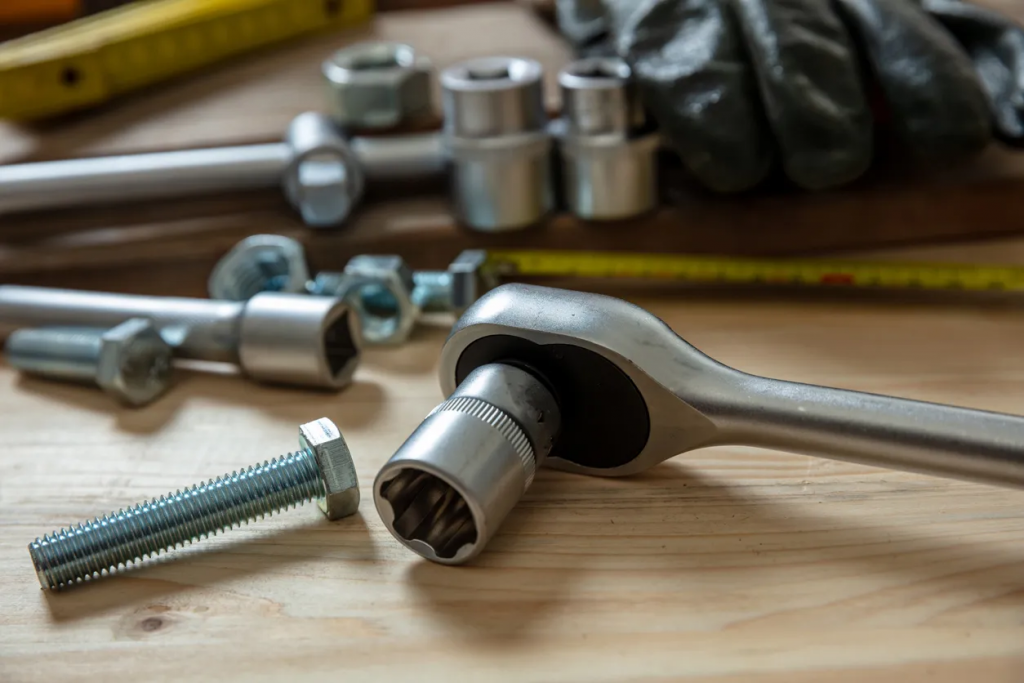
I am a proud American and like to work on cars and other projects around the house. I also have a degree in economics, so I understand the benefits and drawbacks of a world economy. I mainly run into metric-sized bolts and the need for metric tools. This can get a little frustrating as you have to lug around two sets of sockets and wrenches to get some projects completed. Well, here is a chart to see the (close) equivalent sizes, inches to millimeters.
| Inches | Millimeters |
|---|---|
| 1/16″ | |
| 1/8″ | |
| 5/32″ | 4 |
| 3/16″ | |
| 1/4″ | |
| 5/16″ | 8 |
| 3/8″ | |
| 7/16″ | 11 |
| 15/32″ | 12 |
| 1/2″ | |
| 9/16″ | |
| 19/32″ | 15 |
| 5/8″ | |
| 11/16″ | |
| 3/4″ | 19 |
| 13/16″ | |
| 7/8″ | |
| 29/32″ | 23 |
| 15/16″ | |
| 1″ |
Fun Fact: Only three countries – the United States, Liberia, and Myanmar – still officially or stick to the imperial system, while official use does not necessarily reflect everyday practice. Ounces, inches, feet, and Fahrenheit – to most people on Earth, these measurement units are unfamiliar or a distant memory. Merica!